An independent desktop environment emphasizing simplicity, minimalism, and elegance.
A desktop environment should get out of your way, not demand your attention. Budgie Desktop is built on this principle; simple enough for anyone to use, flexible enough for anyone to make their own.
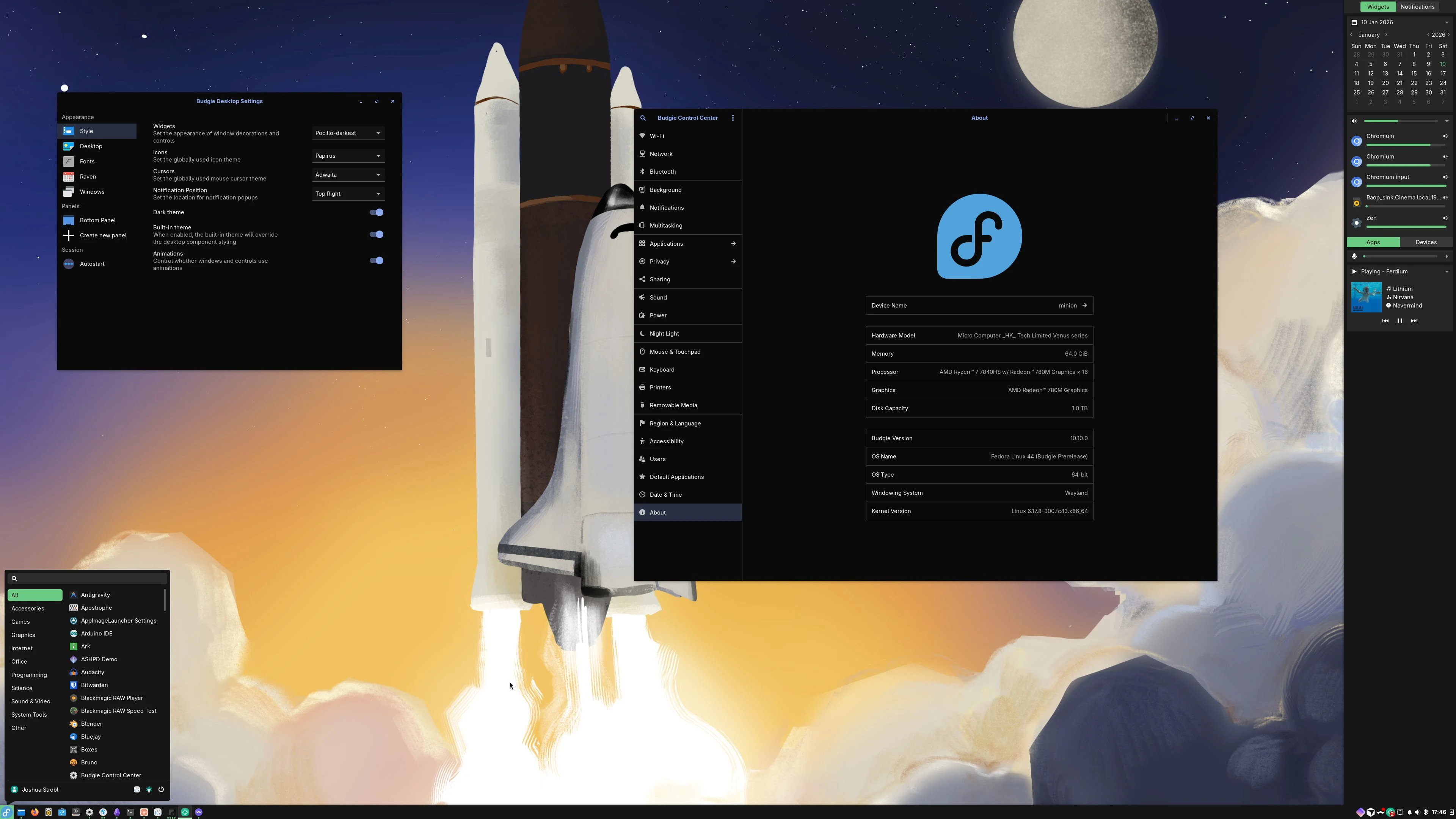
Budgie 10.10 running on Fedora Linux
Budgie encourages our partners to set defaults that best fit their users and audience. Whether it ships with a different theme, alternative applets, or a completely customized layout, we are happy to see Budgie users regardless of what their experience looks like. This philosophy makes Budgie adaptable to different communities while maintaining its core identity.
Three guiding principles shape every aspect of Budgie Desktop's development.
A clean, intuitive interface that gets out of the user's way, allowing them to focus on their work rather than wrestling with the desktop.
Thoughtful design choices that avoid clutter and unnecessary complexity, ensuring every element serves a purpose.
Beautiful aesthetics combined with functional design, creating a desktop that is both pleasant to look at and efficient to use.
Budgie Desktop's journey began on December 14, 2013, when Ikey Doherty announced its development as the default desktop for EvolveOS. What started as a distribution-specific project has grown into an independent, cross-distribution desktop environment.
Budgie 8, released in November 2014, brought significant improvements including a redesigned compact menu with usage-based sorting, panel auto-hide, quicklist support, and application pinning. The project reached a major milestone in December 2015 with Budgie 10, a complete rewrite in Vala that introduced multiple panel support and Raven, the notification center that became one of Budgie's signature features.
Leadership transitioned in 2018 when Joshua Strobl assumed the role after Ikey Doherty's departure. The most significant change came on January 1, 2022, when Buddies of Budgie was established as an independent organization, shifting focus from Solus-specific to serving the entire Linux ecosystem.
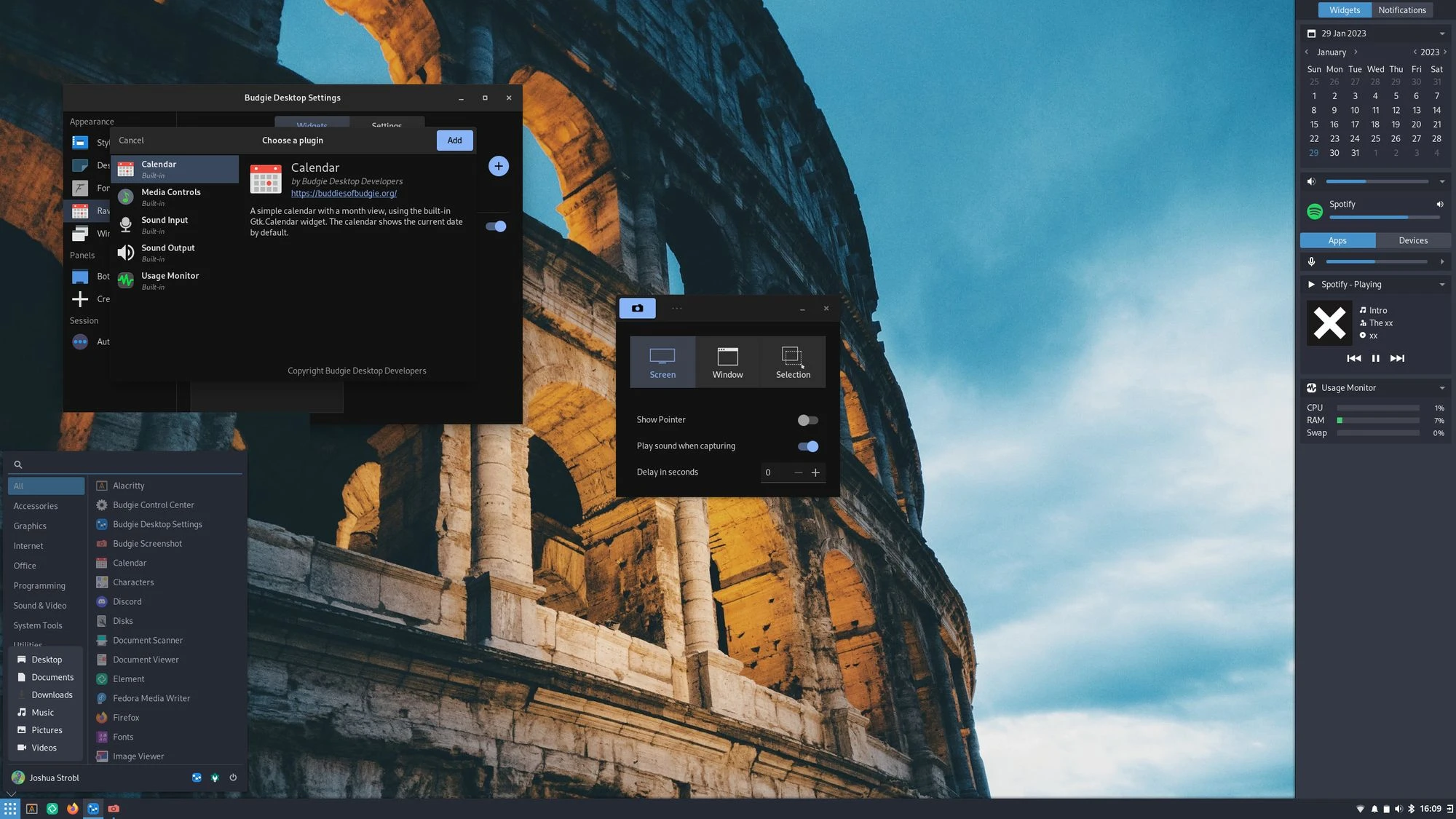
2023
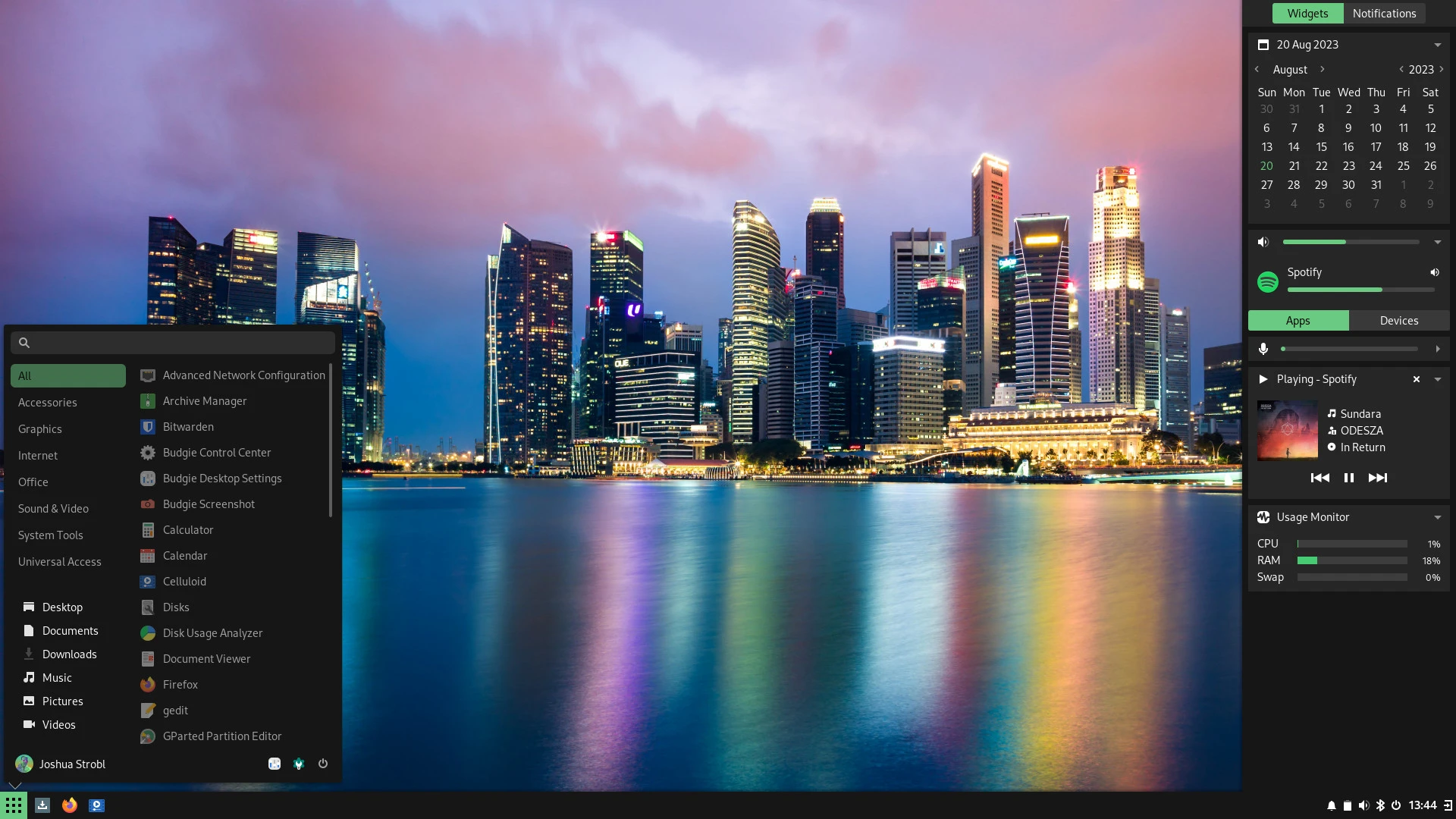
2023
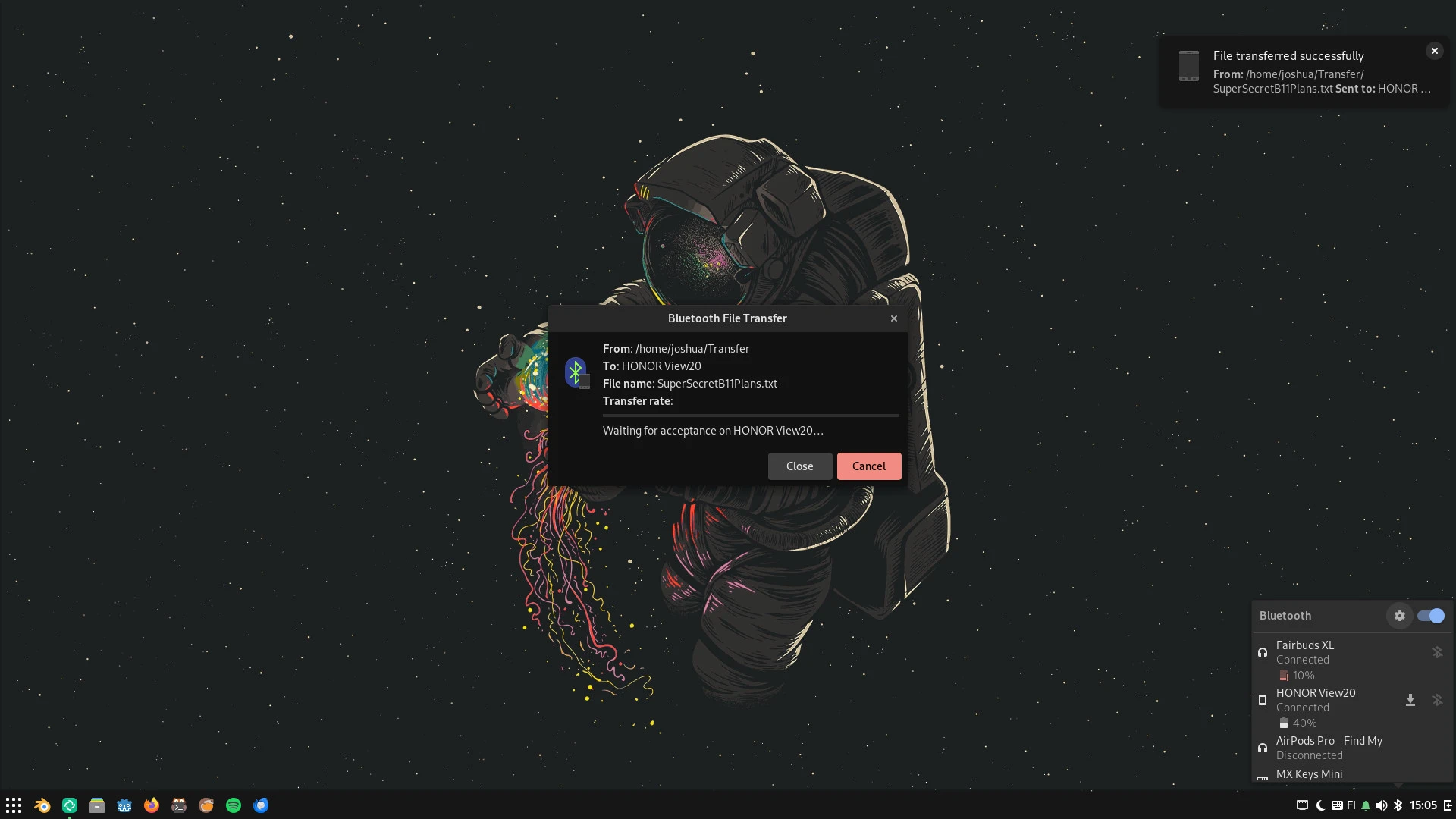
2024
2026
Budgie 11 is a ground-up reimplementation using Qt6 and C++, designed to make Budgie more modular, extensible, and future-proof for the next decade of desktop computing.
Budgie 11 separates the platform into two key layers: Budgie Core, which provides shared libraries and services across all device targets, and presentation layers like budgie-shell, our first-party desktop experience. This architecture opens the possibility for alternative shells to be built on top of Budgie Core, potentially enabling experiences tailored for different form factors or use cases beyond the traditional desktop.
Core desktop shell and panel system
Notification center and widget sidebar
Settings application
Desktop icons functionality
Platform layer with shared libraries and services
DBus services for display, notifications, idle
First-party desktop shell
Mir-based Wayland compositor
Budgie Desktop is available on numerous Linux distributions and beyond.
For a complete list, visit the Get Budgie page.